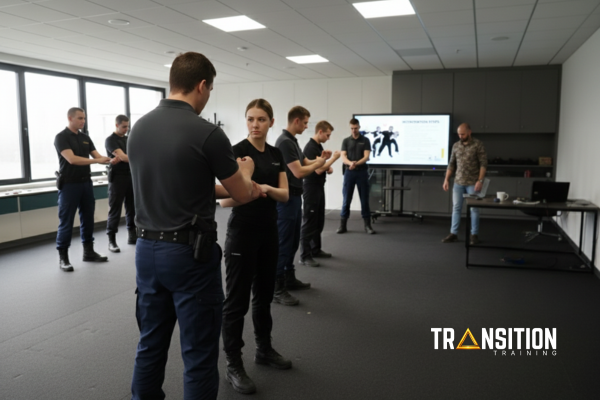
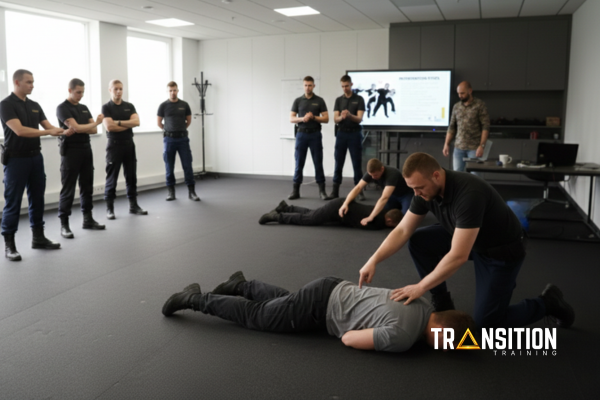
Intervention, restraint & control



Choose your focus
Group training
€450
20 hours · small group · train with real partners
Train with different partners: Learn to handle various body types and reactions.
Practical skills: Techniques designed for real-life situations, not just the gym.
Defense-level instruction: Trained by veterans and certified security professionals.".
Earn a Certificate: for your hard work .
Most popular
Private 1:1 training
Focus: Efficiency and personal progress.
€999
20 hours · full personal attention · your pace
100% personal focus: Every minute is spent on your specific goals and technique.
Train at your own pace: Maximum efficiency with zero distractions.
Faster results: Improve your skills quickly through direct, 1-on-1 feedback.
Customized training: Earn a certificate for your hard work.
This training is for security guards and LE only
By the end of this course you will be able to:
- Identify threats early and prevent escalation.
- Manage cooperative and aggressive behaviour.
- Apply control and restraint techniques safely.
- Act within legal frameworks and proportional force.
- Reduce liability and protect organisational integrity.


TRAINING STRUCTURE
Duration: 20 hours
Schedule: Planned in consultation — typically 4 Sundays (5 hours) or flexible evening sessions aligned with your agenda
MODULES
1. Threat Assessment & Awareness
- Recognizing pre-attack behavior
- Positioning, distance, and angles
- Use of cover and environment
- Decision-making under stress
2. Control & Defensive Techniques
- Close-quarter techniques (Krav Maga CQC)
- Joint locks and control methods
- Takedowns and stabilization
- Escalation vs de-escalation judgment
3. Detaining & Restraint
- Legal and procedural requirements
- Safe control and teamwork
- Transition to controlled positions
- Ground control for resistant individuals
4. Weapon & Threat Handling (Optional)
- Knife and improvised weapon threats
- Gaining control with minimal harm
- Optional training with tools (batons, flashlights, knives)
5. Scenario-Based Training
- Realistic attack simulations
- Stress drills and time pressure
- Team communication and coordination
- Post-incident procedures and reporting